Sprouted Grain Flours: Ragi, Bajra and Jowar Explained
How germination changes millet flour—and practical ways to use it in an Indian kitchen
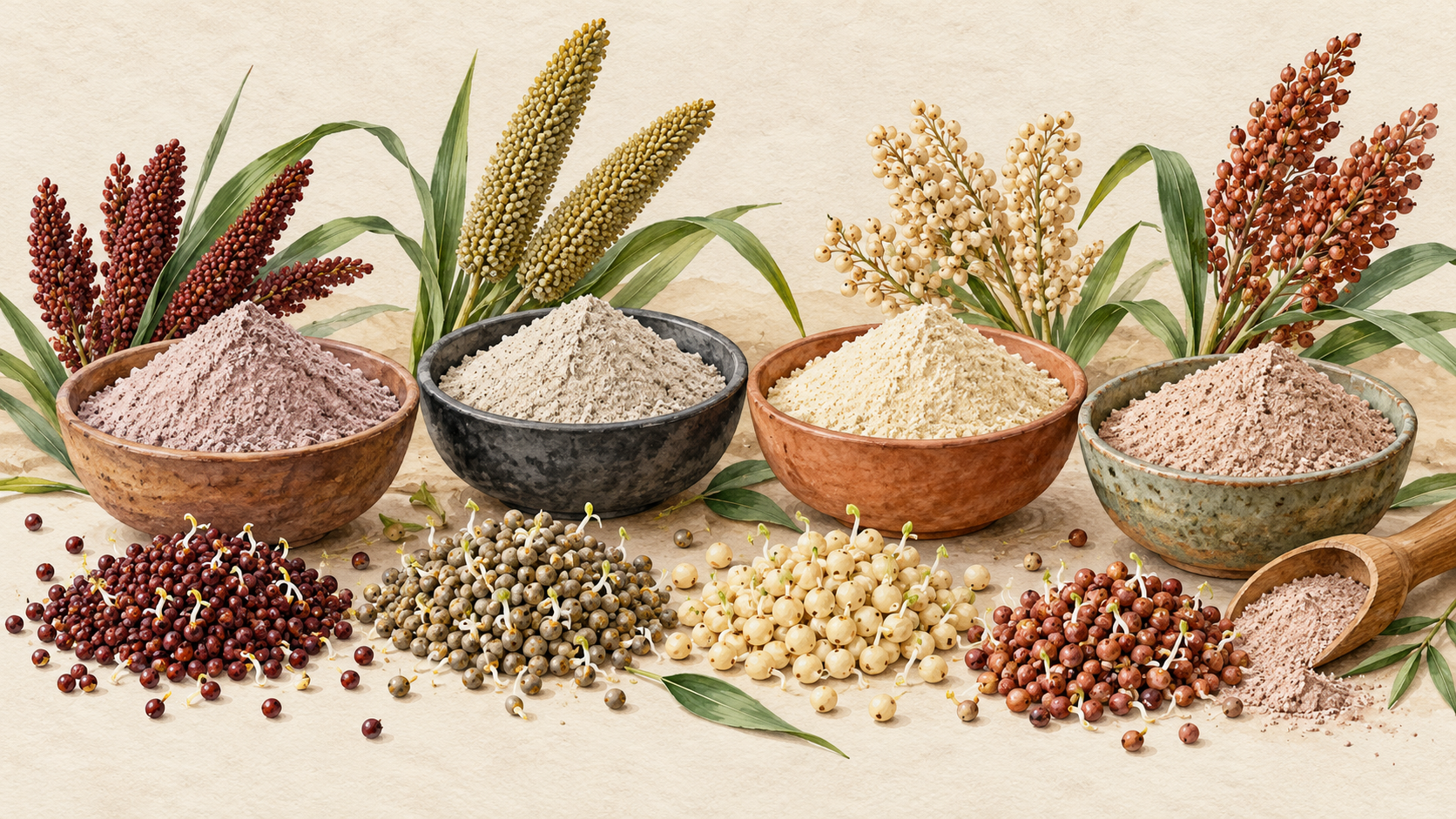
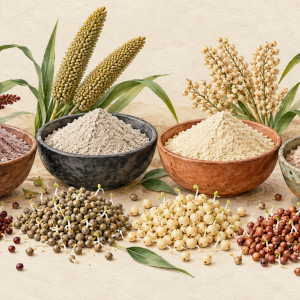
Sprouted grain flour is made by allowing whole grains to begin germinating, then carefully drying and milling them. This extra step changes the grain before it becomes flour, often giving it a gently sweet, nutty flavour and different cooking qualities.
Sprouting can reduce some naturally occurring phytate and change the accessibility of certain nutrients, but the result depends on the grain and the way it is processed. Sprouted flour is still flour: it contains carbohydrate, needs to be cooked, and is best understood as one useful ingredient in a varied diet rather than as a cure or “superfood”.
What does “sprouted” mean?
A whole grain is a seed. Given the right amount of moisture and warmth, it begins to germinate. Enzymes become active and start breaking down some of the compounds stored in the seed to support new growth.
To make sprouted flour, this process is stopped while the sprout is still small. The grain is dried and then milled. Sprouted flour is therefore different from fresh sprouts, which are eaten with their shoots and contain much more moisture.
The details matter. Grain variety, soaking and sprouting time, temperature and drying method all influence the finished flour. “Sprouted” describes a method of preparation; it does not guarantee that every nutrient has increased.
What changes when a grain sprouts?
Scientific reviews of germinated grains describe several possible changes:
- Starch and protein begin to change: active enzymes break down some large molecules into smaller components.
- Phytate may decrease: phytate naturally occurs in grains and can bind minerals. Reducing it may improve the accessibility of some minerals.
- Some vitamins and plant compounds may change: the direction and size of the change vary with the grain and process.
- Flavour and texture change: sprouted flour can taste gently sweeter and may absorb water or brown differently in a recipe.
Much of the research measures the composition of food or laboratory digestion rather than long-term health outcomes in people. It is reasonable to describe sprouting as a useful traditional processing method, but not to promise that it prevents anaemia, controls diabetes or treats another condition.
Meet Dhanyam’s sprouted grain flours
Organic Sprouted Ragi Flour
Ragi—also called finger millet, kezhvaragu, nachni or madua—has a distinctive earthy flavour. It works especially well in porridge, dosa, kali or mudde, roti and selected baked recipes.
Ragi is known among cereals for its naturally high calcium content. Research on germinated finger millet suggests that sprouting can reduce some phytate and improve the extractability of certain minerals, but the result depends on processing. The flour still needs to be cooked thoroughly.
Organic Sprouted Bajra Flour / Kambu Flour
Bajra, or pearl millet, is known as kambu in Tamil. Its flour has a robust, earthy character that suits kambu dosai, adai-style batters, porridge and rotis. Because bajra does not form an elastic gluten network, its rotis benefit from warm water, careful patting and a little practice.
Organic Sprouted Jowar Flour
Jowar, also called sorghum or cholam, has a mild taste that fits easily into everyday meals. Use it for bhakri or roti, dosa, savoury pancakes, porridge and flour blends. Making the dough with hot water and shaping it while warm can produce softer rotis.
Organic Sprouted Red Jowar Flour
Red jowar is a red-grained sorghum with a deeper colour and slightly heartier flavour than pale jowar. It can be used in rotis, dosa batter, pancakes, porridge or multigrain mixes.
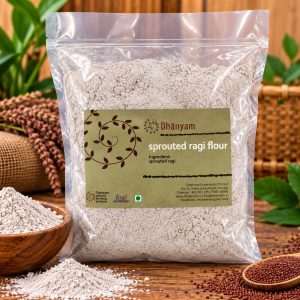


Product stock and delivery availability can vary by location.
Four easy ways to use sprouted flour
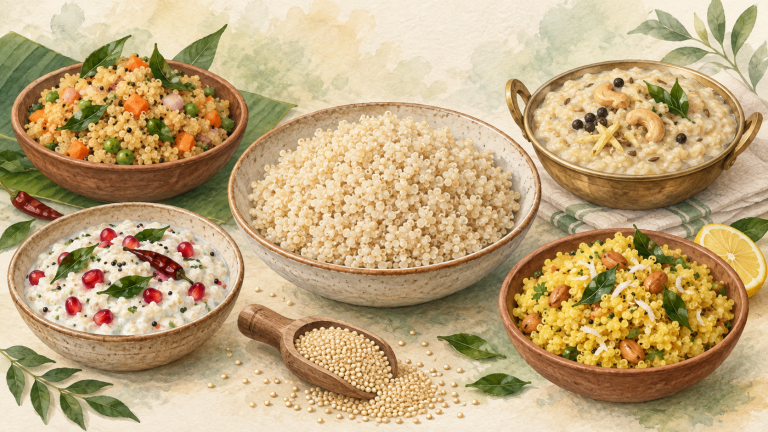
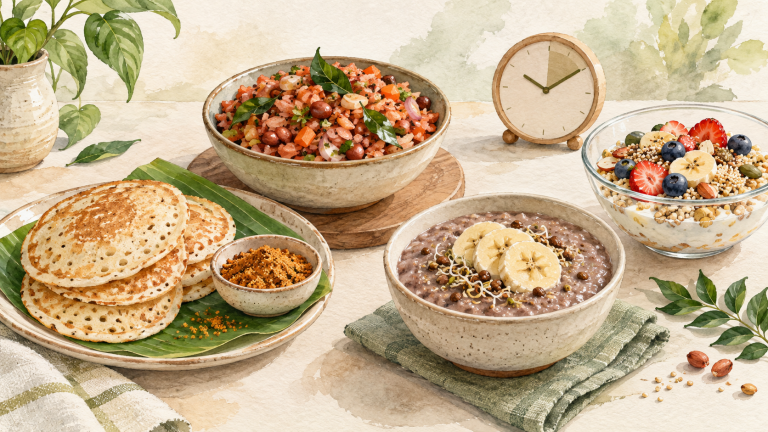
1. Smooth breakfast porridge
Mix the flour first with a little room-temperature water to make a lump-free slurry. Add it to simmering water or milk and cook while stirring until the raw aroma disappears and the porridge thickens.
Add sweetness only if needed. For a more balanced bowl, include milk or curd where suitable, nuts or seeds, and fruit rather than relying mainly on jaggery or sugar. For infants and young children, follow age-appropriate feeding advice and avoid whole nuts or other choking hazards.
2. Dosa or savoury pancakes
Combine the flour with curd or water, finely chopped onion, cumin and vegetables. Rest briefly, adjust to a pourable consistency and cook on a hot tawa. Blending it with urad-dal batter or another millet flour will change the texture and flavour.
3. Roti or flatbread
Millet flours do not form the stretchy gluten network found in wheat dough. Mix with hot or warm water, pat the roti between sheets or shape it by hand, and cook it soon after mixing. Adding wheat atta makes the dough easier to roll, but the finished roti will no longer be gluten-free.
4. Home baking
Begin by replacing a small part of the usual flour in cookies, muffins or quick breads. Sprouted millet flour can alter sweetness, browning and moisture absorption, so a complete one-for-one substitution may require adjustments to liquid and binding ingredients.
Is sprouted flour easier to digest?
Sprouting activates enzymes and begins changing starch, protein and some other grain components. Laboratory studies often report changes in digestibility, but individual comfort varies. The quantity eaten, cooking method, other ingredients and a person’s usual fibre intake all matter.
Introduce an unfamiliar flour gradually if your household is not used to millet-rich meals. Persistent digestive symptoms should be discussed with a qualified health professional rather than managed by assuming that one type of flour will solve them.
Is sprouted flour suitable for diabetes?
Sprouted ragi, bajra and jowar can fit into a balanced meal, but “sprouted” does not mean carbohydrate-free or universally low-GI. Germination conditions and the final preparation can affect starch behaviour, and a flour may produce a different response from an intact grain.
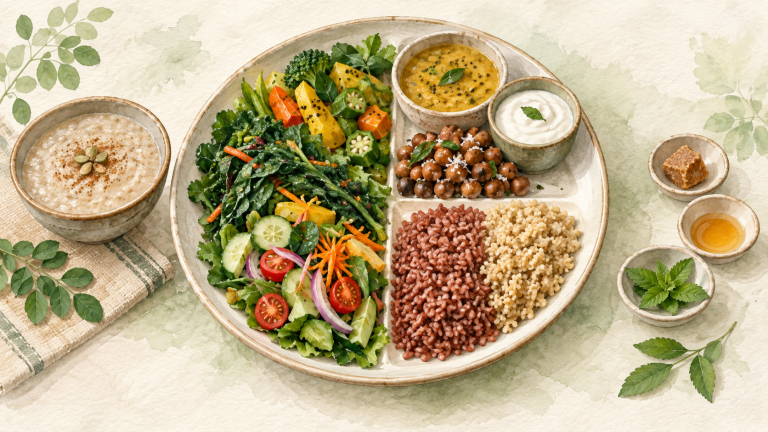
A practical meal pairs a measured portion with non-starchy vegetables and a suitable source of protein such as dal, curd, pulses, eggs, fish or another household choice. People managing diabetes should follow their individual medical or dietetic guidance and, where advised, observe their glucose response to the actual meal.
Are these flours gluten-free?
Ragi, bajra and jowar are naturally gluten-free grains. That does not automatically make every finished pack suitable for someone with coeliac disease. Cross-contact can occur during farming, milling, packing or cooking.
If you require a medically strict gluten-free diet, check the label and allergen information for the specific pack and use separate, clean utensils and cookware. Also check every ingredient in a flour blend, malt or ready mix; some ragi products contain wheat, nuts, sweeteners or other grains.
How to choose and store sprouted flour
- Read the ingredient list: choose a single-grain flour when that is what your recipe or diet requires. A porridge mix, malt or puttu mix may contain several other ingredients.
- Buy a practical quantity: a smaller pack that is used while fresh is better than a large pack kept open for months.
- Keep it sealed: store in an airtight container away from heat, sunlight and moisture, and always use a dry spoon.
- Consider refrigeration: in a warm or humid kitchen, refrigeration can help preserve freshness. Prevent condensation by keeping the container tightly closed.
- Trust your senses: discard flour that smells rancid or musty, shows insects or moisture damage, or looks unusual.
Common mistakes to avoid
- Assuming sprouted means ready to eat: flour should be cooked thoroughly.
- Expecting wheat-like dough: millet flours need different handling because they lack gluten-forming proteins.
- Adding too much sweetener: a sprouted-flour porridge can become dessert-like when heavily sweetened.
- Using “low-GI” as a blanket claim: grain, milling, recipe, portion and meal composition all influence blood-glucose response.
- Confusing flour with a mix: always check whether the product contains wheat, nuts, sweeteners or other ingredients.
- Treating one food as a cure: sprouted flour cannot by itself prevent or treat diabetes, anaemia, digestive disease or another condition.
The bottom line
Sprouting is a traditional preparation method that changes how a grain tastes, cooks and makes some of its components accessible. It can be a useful way to bring ragi, bajra and jowar into familiar dishes without pretending that the process turns flour into medicine.
Choose the grain according to the recipe, cook it well, and build the rest of the meal with vegetables and an appropriate protein source. Ragi suits earthy porridges and dosas, bajra brings a hearty flavour, and jowar or red jowar offers a milder base for rotis, pancakes and blends. Rotation and variety are more useful than searching for one “perfect” flour.