Mappillai Samba Rice: Health, Nutrition and Traditional Strength
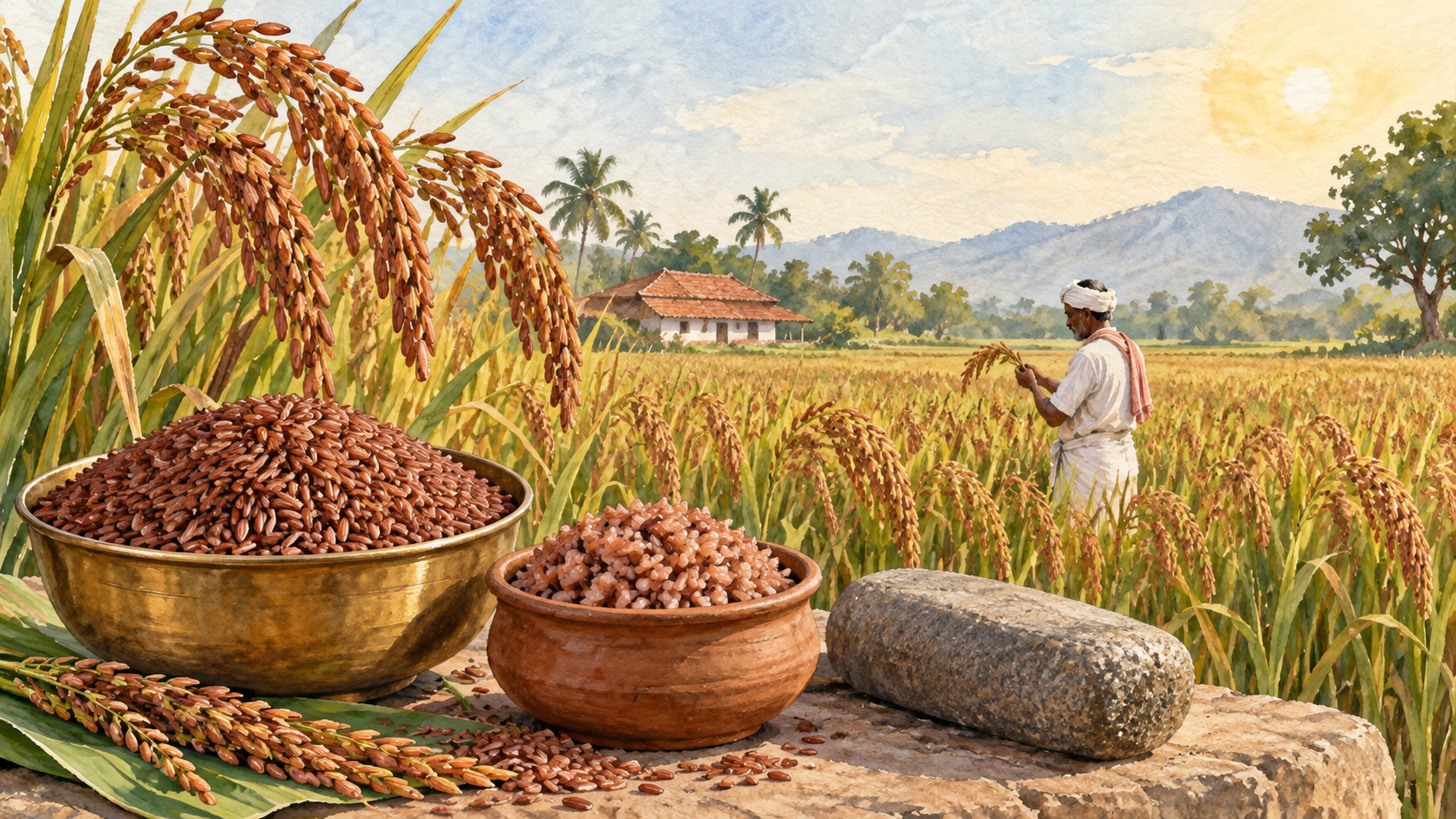
Mappillai Samba is one of Tamil Nadu’s most recognisable heritage rices: a firm, earthy red grain traditionally associated with strength. Its most practical nutritional value today comes from eating it unpolished or minimally polished. Keeping the red bran means retaining more fibre, natural oils, vitamins, minerals and phenolic compounds than when the same grain is polished white.
Why the red bran matters
A rice grain contains an inedible husk, bran layers, the germ and a starchy endosperm. Removing the husk produces unpolished rice. Repeated polishing removes more of the bran and germ, leaving mainly the pale endosperm.
Polishing makes rice softer, faster to cook and more shelf-stable, but it also removes varying amounts of dietary fibre, B vitamins, vitamin E compounds, minerals, natural oils and phenolic compounds. The degree of milling is therefore central to Mappillai Samba’s nutritional value. A heavily polished heritage rice cannot retain all the benefits of its original bran merely because its traditional name remains on the packet.
Health and nutritional benefits
More fibre when minimally polished
Unpolished Mappillai Samba generally provides more fibre than highly polished white rice. Fibre supports regular bowel function and fullness and supplies material used by parts of the gut microbiome. Its firm texture also encourages more chewing, which can make a moderate serving feel more substantial.
Phenolic compounds in pigmented rice
The reddish outer layers contain phenolic compounds associated with antioxidant activity in laboratory studies. Research on South Indian traditional rice has measured meaningful total phenolic content in Mappillai Samba. These compounds are one reason to retain the bran and rotate pigmented whole grains.
More of the grain’s micronutrient-rich layers
The bran and germ contain minerals and vitamins that are reduced to varying degrees by polishing. Exact nutrient levels change with seed line, soil, season, processing and storage, so one laboratory value should not be presented as universal for every Mappillai Samba harvest
Whole-grain variety improves dietary diversity
Replacing some highly refined staple servings with Mappillai Samba introduces a different texture and range of plant compounds. Rotating it with Kullakar, Poongar, Karuppu Kavuni, Thooyamalli, millets and familiar rice varieties is more useful than searching for one “best” grain.
The traditional story of strength
Traditionally, a prospective bridegroom—the mappillai—was expected to demonstrate his strength by lifting an ilavatta kal, a heavy stone. Mappillai Samba rice was associated with the strength and stamina needed for the task. The story preserves the understanding that rice varieties had distinct character and purpose.
Mappillai, Mapillai or Mappilai Samba?
English spellings vary because the name is transliterated from Tamil: Mappillai Samba, Mapillai Samba and Mappilai Samba generally refer to the same heritage variety. “Samba” also connects it with Tamil Nadu’s principal long rice season, traditionally aligned with sowing during the later monsoon period and harvesting around the beginning of the following year.
Tamil Nadu Agricultural University describes Mappillai Samba as a traditional rice that declined after the Green Revolution and records a crop duration of approximately 155–160 days. Exact duration changes with seed line, sowing date, climate, soil, water and cultivation method.
What the crop looks like
Mappillai Samba is typically much taller than modern semi-dwarf paddy. The plant produces substantial stalk and leaf biomass, with mature panicles holding reddish grain. Tall plants can compete well for light and provide useful straw, but height can also make a crop vulnerable to lodging—falling over in wind or rain—when soil fertility, water or weather is poorly matched.
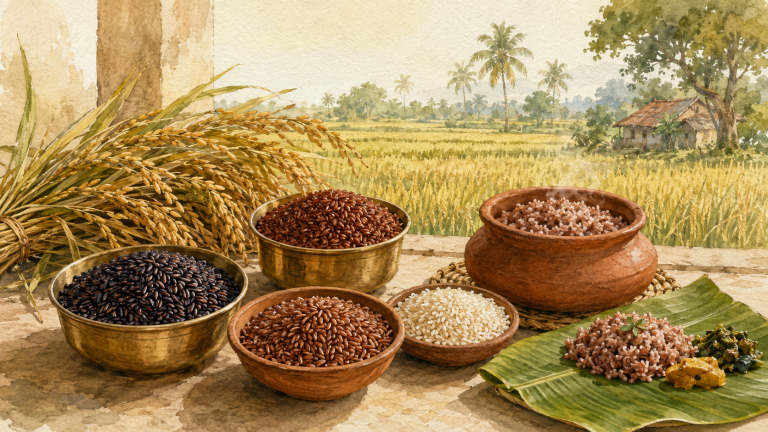
The rice is usually sold red and unpolished or semi-polished, allowing some of the bran layer to remain. It has a pronounced grain, nutty-earthy flavour and more chew than highly polished white rice. Parboiled and polished versions behave differently in the pot, so the processing description matters alongside the variety name.
What is a long-duration rice crop?
Crop duration is the approximate time from sowing to physiological maturity. Rice varieties are often grouped as short, medium or long duration, although the cut-offs vary. Mappillai Samba’s reported 155–160 days places it firmly in the long-duration group.
A longer crop is not simply a slower version of a short crop. It occupies a different ecological and farming niche. Many traditional long-season varieties respond to day length, monsoon patterns and local soils. Their value must be assessed across the whole farm—not only by kilograms of grain harvested as quickly as possible.
Benefits of long-duration crops
More time to build biomass
A long vegetative and reproductive cycle gives the plant more time to produce roots, leaves and stems. In a tall rice such as Mappillai Samba, this can mean abundant straw in addition to grain. Straw has real farm value: cattle feed or bedding where suitable, thatching, mulch, compost and organic matter returned to the soil.
Modern yield comparisons often measure grain alone. A mixed farm may value the whole plant.
A fuller relationship with soil biology
Roots release sugars and other compounds that feed organisms around the root zone. A crop standing for more months maintains living roots in the soil for longer. Under organic management, that extended period can support nutrient cycling and interaction with soil microbes.
This does not prove that every long-duration variety has deeper roots or better soil effects than every short-duration variety. Root architecture is genetic and management-dependent. The defensible point is that a longer living crop gives biological relationships more time to develop when water, aeration and organic matter are well managed.
Time for gradual nutrient uptake
Long-duration crops can acquire nutrients across a longer season rather than completing their cycle rapidly. This can suit farms using compost, green manure and biologically released nutrients, which become available gradually.
Adaptation to a local season
A traditional variety may flower and mature in response to the seasonal pattern in which farmers selected it. Where sowing time, monsoon and irrigation align, a longer samba crop can use the available growing window and mature when conditions are historically favourable.
More habitat within the field
Tall, genetically distinctive paddy can add structural and genetic diversity to a rice landscape. A field maintained for a long season offers habitat over a longer period for spiders, frogs, dragonflies, parasitoid wasps and other organisms—especially where broad-spectrum pesticides are avoided and field bunds remain vegetated.
Genetic diversity and resilience for the future
Keeping Mappillai Samba in cultivation conserves a distinct set of genes. Traditional landraces collectively contain variation for height, flowering, grain quality, pest response and tolerance to environmental stress. No single variety is resilient to every threat, but a food system with many varieties has more options than one built around a narrow genetic base.
Raw, parboiled and polished Mappillai Samba
- Raw unpolished rice retains its red bran and pronounced chew. It works well for table rice, kanji and grinding into batter.
- Parboiled unpolished rice is soaked and steamed in the husk before milling. It tends to remain firm, has a deeper cooked aroma and suits everyday meals and fermented batter.
- Polished parboiled rice is softer and easier for households transitioning from white rice, but more polishing means less bran and fibre.
Choose according to how your household will actually eat it. A gently polished heritage grain used regularly may achieve more than an unpolished packet left untouched because nobody enjoys the texture.
How to cook Mappillai Samba
Heritage grain varies by harvest, age and milling. Begin with this method, then note the ratio that suits your batch.
Open-pot method
Cook soaked rice with roughly 3–3½ cups water at a gentle simmer for 40–60 minutes. Add hot water if needed. For kanji, use considerably more water and cook until the grain opens and the liquid becomes creamy.
If the first batch is too chewy, increase soaking and water before extending cooking aggressively. For separate grains, use slightly less water and allow the cooked rice to rest.
Traditional and everyday uses
- With sambar, rasam and kuzhambu: its earthy grain stands up to tamarind, pepper and robust gravies.
- Kanji: slow-cooked Mappillai Samba makes a substantial breakfast or supper with buttermilk, garlic, cumin, greens or cooked pulses.
- Idli and dosa: replace the usual rice in a familiar batter, soak well and grind thoroughly. The batter produces an attractive reddish colour and fuller taste.
- Curd rice: cook it softer, mash lightly and cool before adding curd.
- Pongal and one-pot meals: combine with moong dal and use extra water for a tender texture.
- Aval and pori: flattened and puffed forms offer quicker breakfasts and snacks.
How to introduce it at home
Start with one Mappillai Samba meal each week. If the texture feels unfamiliar, mix cooked Mappillai Samba with familiar rice or begin with the polished version, aval or dosa mix. Increase the proportion as the household learns the flavour.
Do not compare it only by softness. Highly polished rice is designed to disappear behind the curry; Mappillai Samba contributes flavour and chew of its own. Serve it with dishes that welcome that character.
Choosing and storing the grain
- Check whether the rice is raw, parboiled, polished or unpolished.
- Prefer organic, traceable grain from suppliers who maintain a continuing relationship with growers.
- Expect natural variation, but reject damp, mouldy, rancid or heavily insect-damaged rice.
- Buy a manageable quantity until you know its cooking behaviour.
- Store airtight in a cool, dry place. Bran oils make unpolished rice less shelf-stable than highly polished white rice.
Explore Dhanyam Mappillai Samba products
Dhanyam offers the variety in raw unpolished, parboiled unpolished and polished rice, as well as dosa mix, aval and pori. These formats make it possible to bring the grain back into daily food at the pace that works for each family.
-
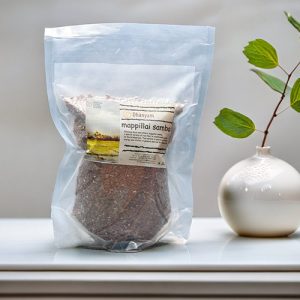
Organic Mapillai Samba Raw Rice Unpolished
₹180.001 kg Add -
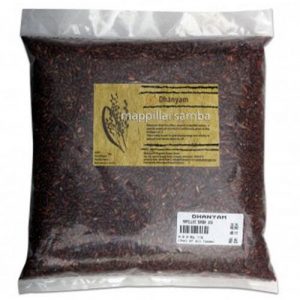
Mapillai Samba Boiled RIce Unpolished
₹180.001 kg Add -
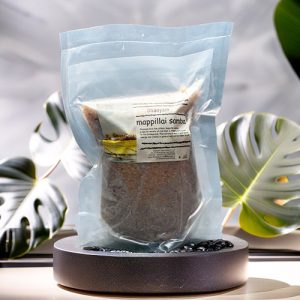
Organic Mapillai Samba Boiled Rice Polished
₹180.001 kg Add -
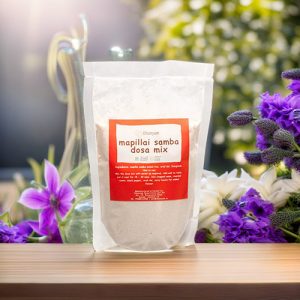
Organic Mappilai Samba Dosa Mix
₹170.00500 g Add -
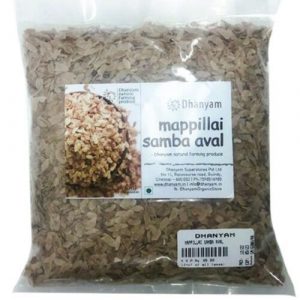
Organic Mappillai Samba Aval | Organic Mapillai Samba Poha | Organic Mapillai Samba Flattened Rice
₹110.00500 g Add -
Organic Mappilai Samba Pori | Organic Mapillai Samba Puffed Rice
₹90.00200 g Add
The bottom line
Mappillai Samba is most nutritionally useful when its red bran is retained and the rice is eaten as part of a varied meal. Compared with highly polished rice, the minimally polished grain preserves more fibre and more of the bran’s naturally occurring micronutrients and phenolic compounds. Its firm texture can also make a moderate portion more satisfying.
Further reading
- Tamil Nadu Agricultural University: Mappillai Samba and Thooyamalli
- Tamil Nadu Agricultural University: rice seasons and crop duration
- Research on South Indian traditional rice varieties, including Mappillai Samba
- Review of the nutritional attributes of pigmented rice
- Traditional rice varieties, biodiversity and climate resilience