GM Foods vs Hybrid Foods: Are They the Same?
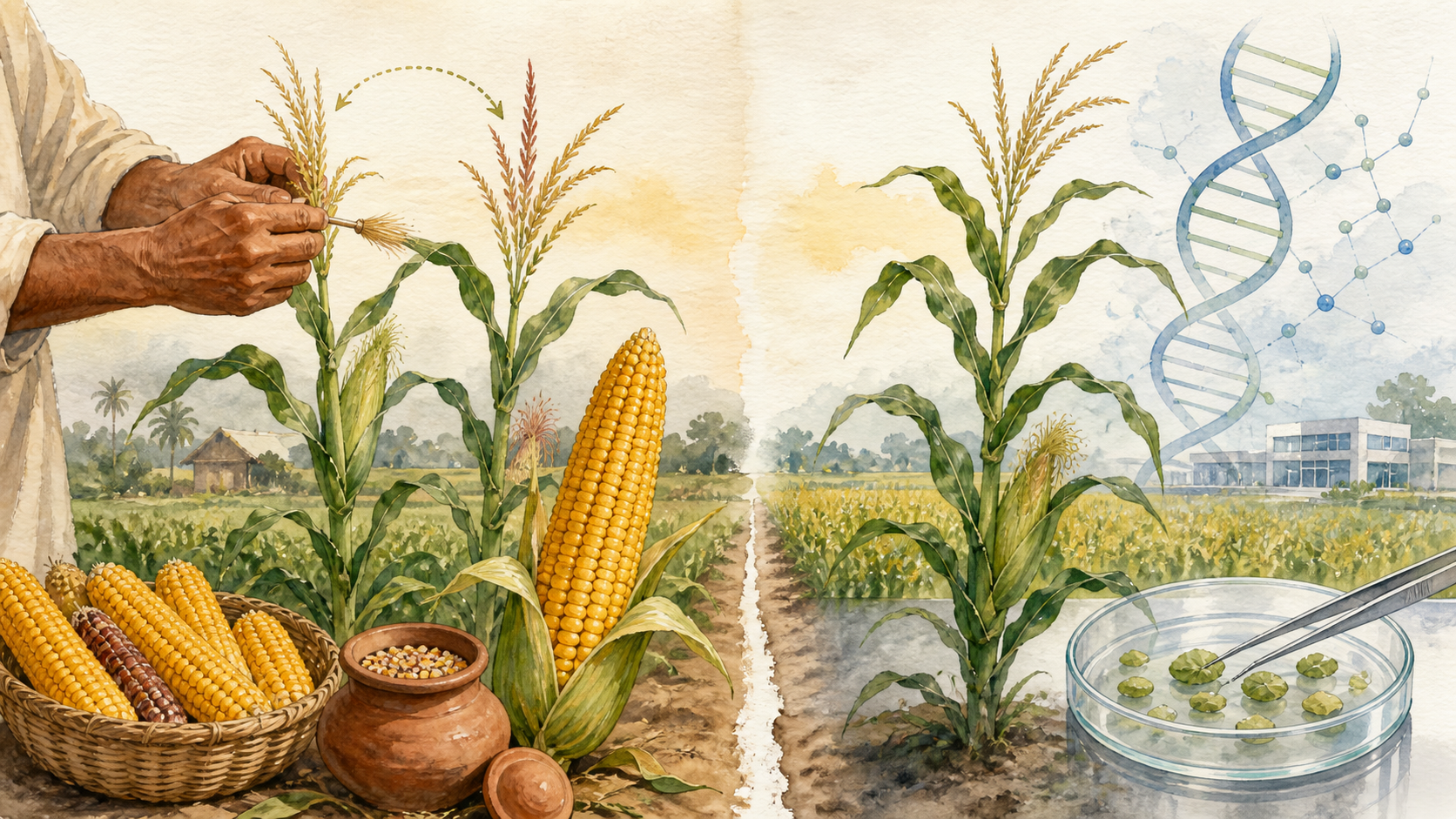
Hybrid and genetically modified crops are often spoken about as if they were the same. They are not. A hybrid is produced by crossing compatible parent plants through conventional breeding. This process has been done by farmers for thousands of years and has a well worn history and is quite safe. On the other genetically modified (GM or genetically engineered) crop is produced by directly changing DNA using modern biotechnology and is considered to have significant safety risks. This difference matters for organic certification, regulation, seed ownership and consumer choice.
Hybrid and GM: the simplest distinction
Hybrid breeding selects two parent lines of the same species—or closely related, sexually compatible plants—and crosses them. Breeders choose the parents for useful traits such as yield, taste, uniformity, disease tolerance or maturity. Pollination and sexual reproduction combine thousands of genes from both parents. Farmers and gardeners have selected and crossed plants for generations; modern hybrid breeding makes that process more controlled. Infact, hybrid breeding is technically same as natural breeding which happens without human intervention.
Genetic engineering alters genetic material through laboratory techniques that do not occur through ordinary mating or natural recombination. A selected gene or genetic instruction may be inserted, removed or changed to create a specific trait. Older commercial GM crops commonly use introduced genes for insect resistance or herbicide tolerance. Newer gene-editing methods can make more targeted changes, although their legal treatment differs between countries. Sometimes, specific gene strands from a completely unrelated species (even a bacterium or an animal) may be inserted into the gene of a plant. For example, BT Cotton, has the genetic sequence from the Bacillus thuringiensis.
Hybrid versus GM at a glance
| Question | Hybrid crop | GM crop |
|---|---|---|
| How is it made? | Crossing compatible parent plants | Direct laboratory alteration of DNA |
| Can unrelated-species DNA be used? | Not through ordinary hybrid crossing | Possible with some GM techniques |
| Can it be certified organic? | Yes, if produced under organic standards | No; genetic engineering is excluded from organic production |
| Can saved seed reproduce the same crop? | F1 hybrid seed usually does not remain uniform in the next generation | Depends on biology, licence, patent and seed system |
| Does it require special GM approval? | No, although normal seed and food rules apply | Yes, in countries with GM regulation |
Can hybrid crops be organic?
Yes. “Hybrid” describes the breeding method; “organic” describes how the seed and crop are produced and handled. A non-GM hybrid variety can be grown without prohibited synthetic pesticides and fertilisers, following soil, biodiversity, record-keeping and certification requirements. Organic farmers commonly use both open-pollinated and hybrid varieties.
A GM crop cannot be intentionally grown or used as certified organic under recognised organic systems. Genetic engineering is treated as an excluded method. Organic operators must also take reasonable steps to prevent mixing with GM crops.
Why many people are concerned about GM crops
Each GM event brings a different question
“GM food” is not one ingredient. A herbicide-tolerant soybean, insect-resistant maize and nutritionally modified rice use different traits and must be assessed separately. Safety evaluation examines toxicity, allergenicity, nutritional composition, stability of the inserted change and unintended effects. But broadly, GM foods as a category are untested over long periods of time, because the technology is new and no tests have been done on their impact over generations. Therefore its better to stay safe and avoid these foods as what impact this will have over a course of decades or generations is not clear.
Possible allergy concerns
A new protein could theoretically introduce an allergen or alter the expression of existing components. This is why allergenicity assessment examines the gene’s source, similarity to known allergens, protein stability and other evidence. Transfers from known allergenic sources are discouraged unless safety can be demonstrated.
GM crops like Bt Brinjal rely on a natural toxin produced by the genes from Bacillus thuringiensis for controlling pests. Their impact on humans are untested over long periods of time and potentially unsafe.
Insect resistance can also weaken
Bt crops produce proteins that affect particular insect pests and may reduce some insecticide spraying. If resistance-management measures such as refuges are neglected, target insects can evolve resistance. Stewardship therefore matters throughout the crop’s commercial life, not only at approval.
Gene flow and contamination
Pollen or seed can move between fields through wind, insects, machinery, storage and transport. Mixing can affect organic certification, traditional seed lots and export markets even when no immediate health harm is involved. Buffer zones, separate handling and traceability reduce the risk but cannot always eliminate it.
India: Bt cotton, but no routine GM food cultivation
In India, Bt cotton is the only GM crop commercially approved for cultivation. It is a fibre crop, although cottonseed derivatives can enter feed and oil supply chains under applicable rules. GM food crops cannot simply be cultivated, manufactured, sold or imported without the required regulatory scrutiny and approvals. Bt brinjal remains under moratorium, and other proposals have been subject to regulatory, legal and public debate.
India’s cautious position reflects questions about biosafety, biodiversity, small-farmer livelihoods, seed systems, monitoring capacity and public consent—not a scientific declaration that every GM food is inherently poisonous.
Seed-company concentration and farmer self-reliance
GM traits are costly to develop and regulate and are often controlled through patents, licences and a small number of large companies. When proprietary traits dominate a crop, farmers may face higher seed prices, restrictions on saving seed, technology fees and dependence on the company’s seed and associated inputs. Consolidation can reduce the diversity of suppliers and shift bargaining power away from farmers.
At a national level, food security is more resilient when a country maintains public germplasm, diverse local varieties, independent research capacity and multiple seed sources. Yield alone is not enough; affordability, adaptability, biodiversity and farmers’ ability to choose must also count.
What about imported corn from the United States?
This concern has a factual basis but needs careful handling. More than 90% of corn acreage in the United States is planted with genetically engineered varieties, according to the USDA. Therefore, conventional corn or corn ingredients sourced from the US have a meaningful likelihood of coming from GM supply chains unless identity-preserved, tested or certified under a standard that excludes genetic engineering.
How consumers can make a more informed choice
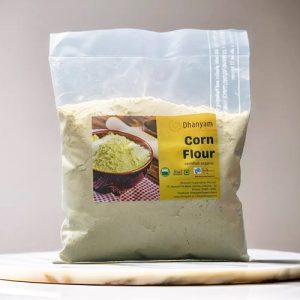
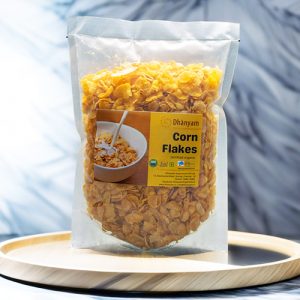
- Choose certified organic corn, corn flour and corn products when avoiding GM ingredients is important to you.
- Check the country of origin, ingredient list, certification details and importer information.
- Ask brands whether their corn is identity-preserved non-GM and whether they use accredited testing.
- Do not treat an unsupported “GMO-free” sticker as equivalent to recognised certification and traceability.
- Remember that highly refined corn derivatives may be difficult to authenticate without supply-chain records and appropriate laboratory methods.
The balanced conclusion
Hybrid and GM crops are fundamentally different technologies. Hybrids can be organic; GM crops cannot.
The strongest concerns extend beyond a single meal: herbicide and insect resistance, gene flow, biodiversity, corporate control of seed, farmer dependence and national seed security. Consumers who prefer to avoid GM ingredients can choose credible organic certification, strong traceability and transparent sourcing—particularly for corn and soy ingredients from countries with high GM adoption.