Raining Turmeric: A Guide to Dhanyam’s Golden Varieties
From the masala dabba to traditional skincare and comforting cups, every turmeric has its place.
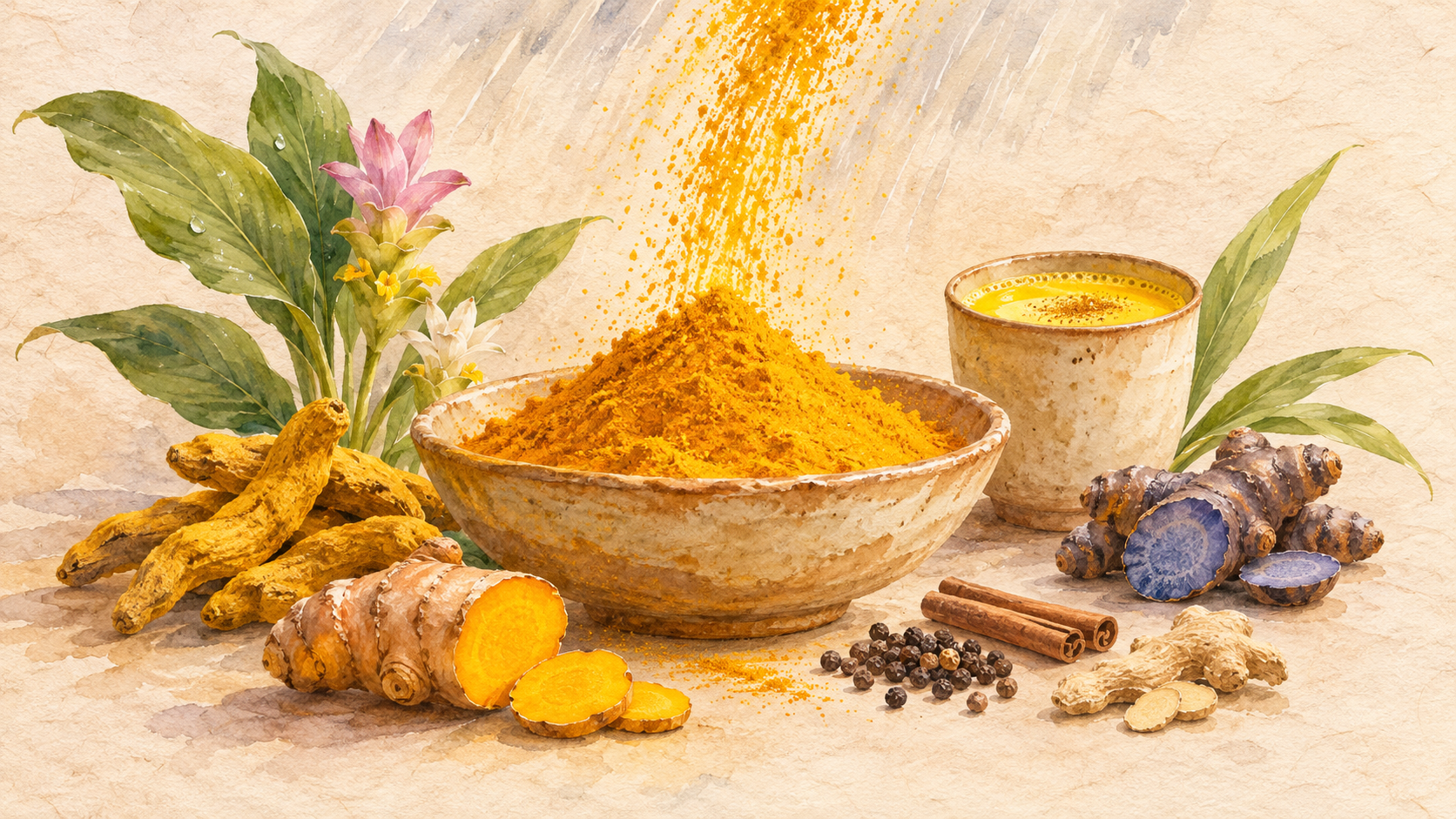
At Dhanyam, turmeric does not arrive in just one shade or one form. There is everyday cooking turmeric, whole dried turmeric, the deep gold of Lakadong, rare black turmeric, raw turmeric powder, fragrant kasturi manjal for traditional skincare, and turmeric blends ready for a cup.
They may share a family name, but they are not all meant for the same purpose. Here is a practical guide to choosing the right turmeric for your kitchen, cup or skincare ritual.
The everyday golden rain: turmeric for cooking
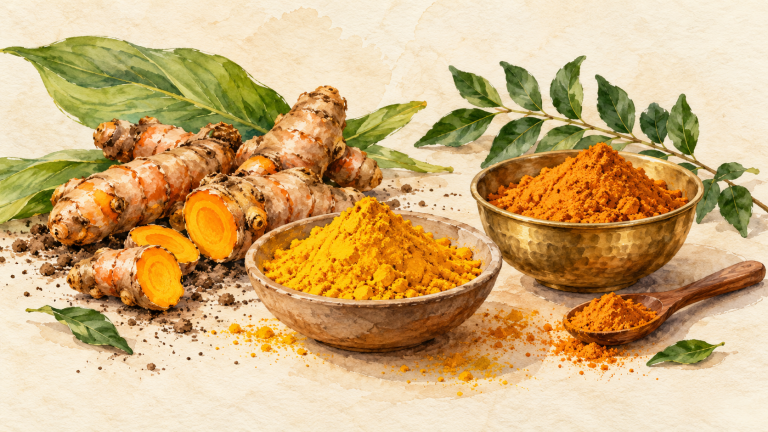
For most kitchens, Organic Turmeric Powder is the familiar all-rounder. Its warm, earthy flavour and bright colour belong in sambar, rasam, poriyal, kootu, dal, curries, marinades and pickles. Because it is already finely ground, it disperses easily and is convenient for daily cooking.
Use it with a light hand. Turmeric should round out a dish, not leave it dry or bitter. A small pinch is often enough for a family-sized vegetable preparation; recipes with more dal or gravy may need a little more.
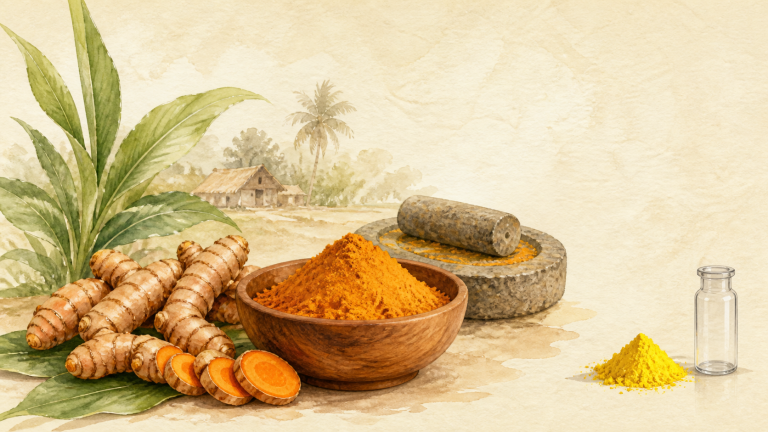
For cooks who prefer to begin one step closer to the root, Organic Turmeric Whole offers dried whole turmeric fingers. These can be ground in small batches or used in traditional preparations that specifically call for the whole form. Whole turmeric is hard, so use a strong spice mill or have it professionally ground rather than risking a light domestic mixer.
Organic Lakadong Turmeric Powder comes from Northeast India and is valued for its vivid golden colour, rich aroma and naturally high curcumin content. In the kitchen, its most useful differences are sensory: a little can bring a more assertive turmeric character and deeper colour than a standard everyday powder. Try it in a simple dal, lightly spiced curry, soup, turmeric milk or homemade masala. Begin with less, taste and adjust.
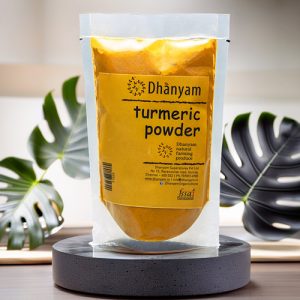
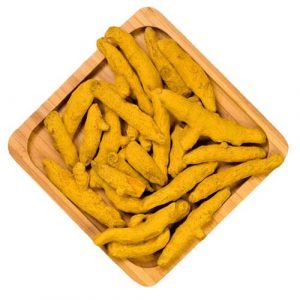
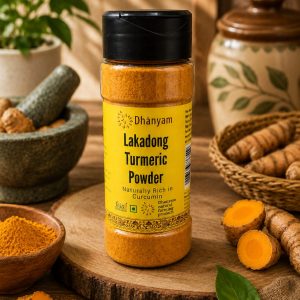
Everyday, whole or Lakadong: which should you choose?
| Form | Best suited to | What to remember |
|---|---|---|
| Everyday turmeric powder | Regular cooking and easy measuring | The simplest all-purpose choice for the masala dabba |
| Whole turmeric | Small-batch grinding or a recipe needing the whole form | Use equipment suited to hard dried rhizomes |
| Lakadong turmeric | Dishes where deeper colour and aroma should be noticed | Start with a small quantity; more is not automatically better |
Curcumin is one of turmeric’s natural pigments, but a higher-curcumin variety should still be treated as food—not as a cure. Colour alone cannot tell you a powder’s purity or curcumin content.
Raw turmeric powder: read the purpose first
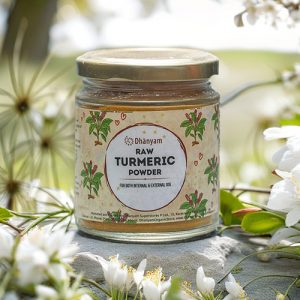
Dhanyam’s Organic Raw Turmeric Powder is presented primarily for traditional beauty and skincare use. Despite sitting close to culinary turmeric in name, it should not automatically be substituted for the regular cooking powder.
“Raw” usually describes processing: the rhizome is dried without the customary boiling or steaming stage used for familiar cooking turmeric. It is not a universal quality grade. For a closer explanation, see Raw Turmeric Powder: How It Differs from Cooking Turmeric.
Traditional body-care rituals may combine a small quantity of an appropriate turmeric powder with a simple base. External use still calls for care: turmeric can stain skin, fabric and surfaces, and natural ingredients may irritate some people. Follow the pack directions, patch-test first, avoid broken skin and the eye area, and stop if irritation occurs.
Black turmeric: a different species, not a darker masala
Organic Black Turmeric Powder is made from Curcuma caesia, a different species from familiar yellow cooking turmeric, Curcuma longa. Its rhizome is blue-black, and its aroma and flavour are more intense and unusual.
Black turmeric has a history of traditional use, but rarity and tradition should not be mistaken for proof of sweeping health claims. It is not the natural “premium upgrade” for every sambar or curry. Use it only for the intended purpose stated on the pack. If you are considering it for a wellness practice—particularly during pregnancy, while taking medicines or while managing a health condition—seek qualified advice first.

Kasturi manjal: turmeric’s fragrant skincare cousin
Kasturi manjal, or wild turmeric (Curcuma aromatica), belongs in the skincare part of the shelf rather than the masala dabba. Dhanyam currently lists two useful formats:
- Kasthuri Manjal Powder | Wild Turmeric Powder is the straightforward choice for people who already have a preferred traditional preparation.
- Kasturi Manjal Skin Care Powder | Wild Turmeric Skin Care Powder is a blend of kasturi manjal, vetiver, rose petal and marikozhundhu (davana).
Kasturi manjal is traditionally valued for body-care preparations and is less likely than ordinary culinary turmeric to leave a strong yellow stain. That does not make it stain-proof or suitable for every skin type. Patch-test first, use it externally, follow the label and do not assume that a kitchen recipe and a facial-care recipe are interchangeable.


Turmeric by the cup: two easy routes
Not every turmeric moment begins with a teaspoon and a spice box.
Organic Turmeric Latte Premix is made in Dhanyam’s Sattva Kitchen with turmeric, brown sugar, cinnamon, black pepper and dry ginger. Stir it into hot milk or a plant-based alternative for a sweet, warmly spiced drink. Because the mix already contains brown sugar, taste before adding more sweetener.
Amla Turmeric Detox Drink combines distilled water from amla and turmeric extract and has no added sugar according to its current product description. Its tart amla note makes it quite different from a creamy turmeric latte. “Detox” is part of the product name; enjoy it as a beverage rather than treating it as a medical cleanse.


A quick guide to Dhanyam’s turmeric shelf
| What you want | A suitable option | Important note |
|---|---|---|
| A daily cooking spice | Organic Turmeric Powder | The easiest all-purpose choice |
| Turmeric to grind at home | Organic Turmeric Whole | Use a mill suited to hard dried rhizomes |
| Strong colour and distinctive aroma | Organic Lakadong Turmeric Powder | Begin with less and adjust |
| A powder intended mainly for body care | Organic Raw Turmeric Powder | Check the directions; do not assume it is culinary |
| Rare Curcuma caesia | Organic Black Turmeric Powder | Not an automatic substitute for yellow turmeric |
| Traditional external skincare | Kasthuri Manjal Powder | Patch-test and use externally |
| A ready-blended skincare powder | Kasturi Manjal Skin Care Powder | Also contains vetiver, rose and davana |
| A sweet hot drink | Organic Turmeric Latte Premix | Already contains brown sugar |
| A tart bottled drink | Amla Turmeric Detox Drink | Enjoy as a beverage, not a cure or cleanse |
Keep the gold at its best
- Keep it dry. Store turmeric powders in tightly closed containers away from steam, heat, moisture and direct sunlight.
- Use a dry spoon. Moisture shortens shelf life and encourages spoilage.
- Buy a practical pack size. Turmeric is best used while its aroma is still fresh.
- Do not judge by colour alone. Strong colour is not proof of quality, and a duller shade does not by itself prove that a powder is poor.
- Separate kitchen and skincare products. Similar names can hide very different intended uses.
If purity or adulteration is your main concern, read Turmeric Adulteration: What May Be Hiding in Your Haldi?. Home tests can be suggestive, but laboratory analysis is the reliable way to identify many contaminants.
Let it rain—wisely
The pleasure of a wide turmeric shelf is not that one variety must be crowned “best”. Each has its own place: everyday turmeric in the tadka, whole turmeric waiting for the grinder, Lakadong glowing in a simple curry, kasturi manjal beside a traditional bath powder, and a spiced premix ready for a rainy-evening cup.
Choose for the use, follow the label, and let turmeric bring colour, aroma and tradition without asking it to perform miracles.