Heritage Grains & Traditional South Indian Cooking: The Comeback of Heritage Rice
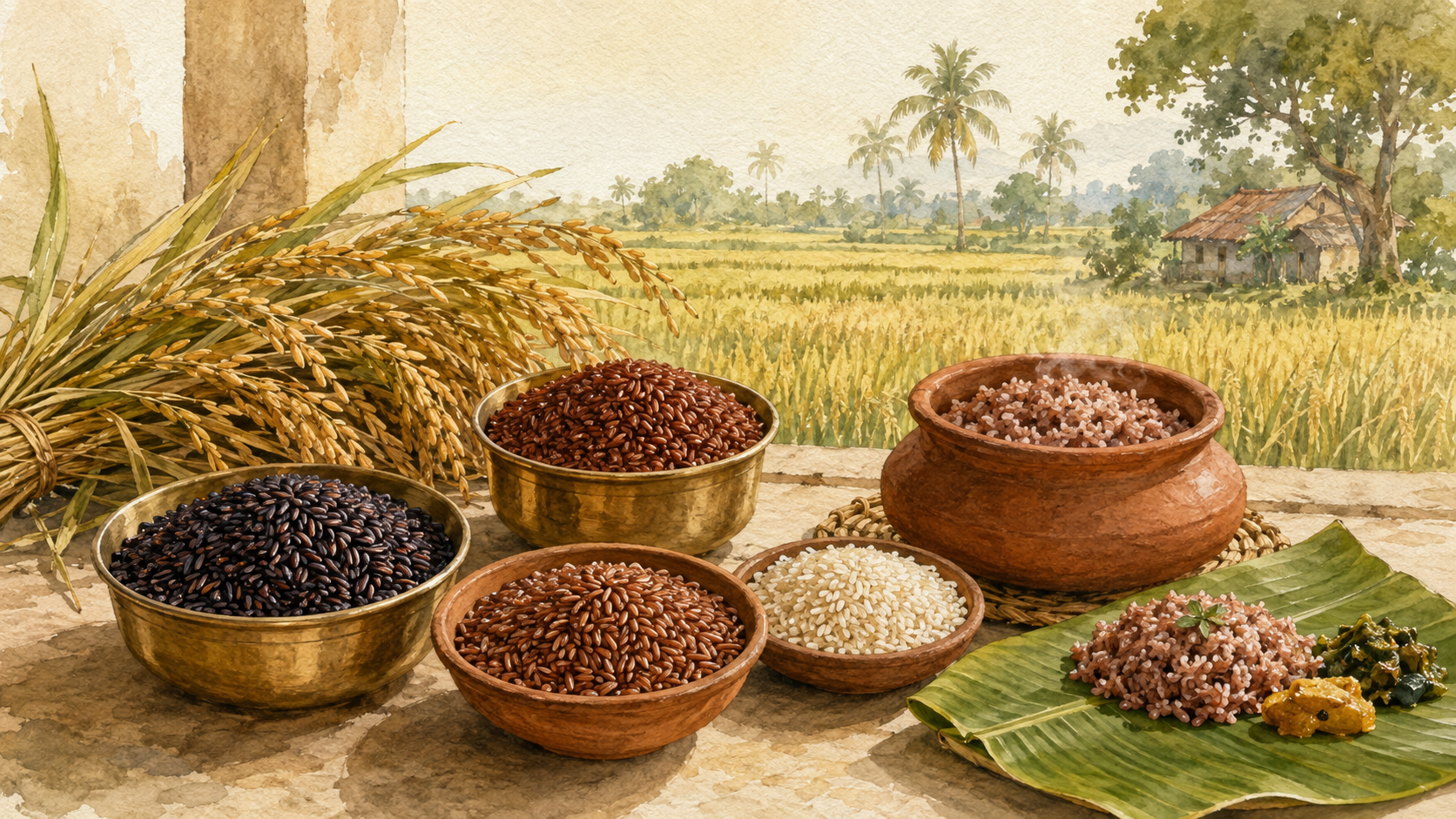
For generations, rice in Tamil homes was never simply “rice”. Families knew grains by name, season, soil, colour, aroma and the dishes they suited. A farmer might choose one variety for a dry field, another for flood-prone land, a short-season rice when rains arrived late, and a fragrant or soft-cooking grain for a particular meal.
Modern high-yielding varieties and highly polished white rice brought uniformity, quick cooking and dependable supply. They also narrowed what reached our plates. Today, heritage varieties such as Mappillai Samba, Karuppu Kavuni, Kattuyanam, Kuzhiadichan, Sivan Samba, Karunkuruvai, Kullakar, Poongar and Thooyamalli are returning—not as museum pieces or miracle foods, but as living grains with distinct flavours, textures and relationships to Tamil landscapes.
What is heritage rice?
“Heritage”, “traditional”, “indigenous” and “landrace” are often used loosely. In this context, they refer to rice populations selected, saved and grown by farming communities over many generations, before the widespread adoption of modern uniform cultivars.
A landrace is not always genetically identical from plant to plant. Its diversity can be part of its strength. Farmers maintained varieties because they performed under particular conditions—drought, flood, salinity, local pests, a certain season—or because households valued their straw, taste, colour, keeping quality or suitability for dishes such as kanji, idli, dosa, puttu and aval.
“Old” does not automatically mean nutritionally superior, low-glycaemic or easy to cultivate. Heritage rice matters because it expands the genetic, ecological and culinary choices available to farmers and eaters.
What changed with modern white rice?
A rice grain consists of the husk, bran layers, germ and starchy endosperm. Removing the inedible husk gives brown or unpolished rice. Further polishing removes much of the bran and germ, leaving the pale endosperm we recognise as white rice.
Polishing makes rice softer, quicker to cook and less prone to rancidity during storage. But it also removes much of the grain’s fibre, oils, vitamin E compounds, B vitamins, minerals and phenolic compounds. The degree of milling often matters as much as the variety itself: a heavily polished heritage rice may lose many of the features people are seeking, while a minimally polished modern variety retains more of its outer grain.
Modern rice is not “empty” or poisonous. It remains an important source of energy and can belong in a healthy meal. The comeback of heritage rice is about restoring diversity and choosing less-polished grains more often, not creating fear around every bowl of white rice.
Nutritional strengths of traditional red and black rice
More of the whole grain
Many heritage rices are sold unpolished or only lightly milled. Retaining the bran and germ generally provides more fibre and micronutrients than polishing the same grain white. Fibre also contributes to fullness and supports bowel health.
Natural pigments and phenolic compounds
Red rice contains proanthocyanidins and other phenolic compounds concentrated in the outer layers. Black and purple rice such as Karuppu Kavuni contain anthocyanins—the same broad family of pigments found in dark berries. Laboratory research shows antioxidant activity, but a food’s test-tube antioxidant value is not a promise that it prevents or cures disease.
A wider range of flavours and textures
Nutrition is not only a list of compounds. A grain with satisfying aroma, chew and colour can make a simple meal of rice, dal, vegetables and curd feel complete. That may encourage home cooking and dietary variety more effectively than treating rice as a neutral carrier.
Glycaemic response is not determined by colour alone
Some minimally polished traditional varieties may produce a slower glucose response than soft, highly polished white rice, particularly because of bran, fibre, grain structure and amylose. But “heritage rice” is not automatically low-GI. Variety, polishing, soaking, cooking softness, portion size and the rest of the meal all matter.
People managing diabetes should monitor their own response and follow individual medical advice. Pair rice with dal, legumes, vegetables, curd, nuts or seeds; keep the serving proportionate; and avoid assuming an unlimited portion becomes safe because the grain is red or black.
Nine Tamil heritage varieties to know
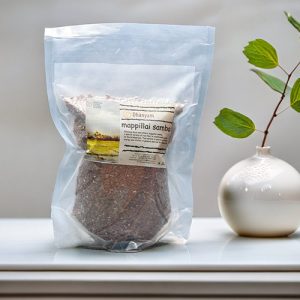
Mappillai Samba
Mappillai Samba is a robust red rice and one of the best-known grains in the current revival. The name is commonly translated as “bridegroom’s samba”, linked in oral tradition with strength and stamina. Its firm, earthy grain has a pronounced chew and stands up well to sambar, kuzhambu, rasam and curd.
Use unpolished raw or boiled Mappillai Samba for everyday meals, kanji and mixed rice. Soaked grain can also be ground into idli or dosa batter; aval and puffed versions offer easier ways to learn its flavour. Traditional stories are culturally valuable, but claims that it cures diabetes or dramatically increases strength should not replace nutrition evidence.
Karuppu Kavuni
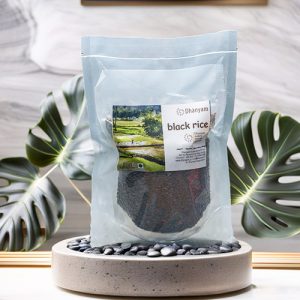
Karuppu Kavuni is an intensely black-purple rice. Its bran pigments contain anthocyanins, and cooking turns the grain a deep violet. It has a distinctive nutty aroma and can be pleasantly sticky or chewy according to milling and preparation.
Tamil kitchens often use it for sweet kavuni arisi with coconut and jaggery. It can also be cooked without sweetness as a small part of a grain bowl, kanji, dosa batter or savoury salad. Because it remains rice rich in carbohydrate, its dark colour does not make added sugar in a dessert nutritionally invisible.
Kattuyanam
Kattuyanam is famous for its exceptionally tall plants—the name evokes the idea of being tall enough to hide an elephant. Traditional accounts value it for resilience, including suitability for flood-prone conditions. Its height also produces useful straw, though tall plants require skilful cultivation.
The reddish-brown rice is hearty and firm. It suits table rice, one-pot dishes, kanji and fermented batters. Give it a generous soak and allow more water and time than polished rice.
Kuzhiadichan
Kuzhiadichan, also written Kuzhiyadichan, is associated with adaptation to difficult soils and dry conditions; Tamil Nadu Agricultural University material lists it among drought-resistant landraces and also notes suitability in saline conditions. It reminds us that the value of a rice is not limited to yield under ideal irrigation.
It can be prepared as everyday boiled rice and porridge. As with many less-standardised landraces, cooking behaviour can vary by farmer, harvest and milling, so learn the batch rather than relying on one rigid ratio.
Sivan Samba
Sivan Samba is a traditional samba rice valued for its full flavour and firm texture. It works well with everyday Tamil gravies, dal and vegetables and can be used for kanji or batter after adequate soaking.
Traditional food writing attributes many medicinal qualities to Sivan Samba. These accounts deserve respectful documentation, but they should be presented as traditional knowledge unless tested in appropriate human studies.
Karunkuruvai
Karunkuruvai is a dark-grained traditional rice. A Tamil Nadu sourcebook describes the grain as black and the rice as dark brown, with notable protein, fat and mineral values in the sample analysed. It is traditionally used for idli and dosa and is also associated with Siddha practice.
Nutrient composition changes with soil, season and milling, so one analysis should not become a universal number printed against every crop. In the kitchen, Karunkuruvai’s strong character makes it particularly interesting in fermented batter, kanji and mixed-grain preparations.
Kullakar
Kullakar is a small red rice with a warm, earthy flavour. Agricultural references include it among landraces adapted to drought and among varieties with resistance to pests and diseases. The grain is versatile: boiled rice, kanji, idli, dosa, paniyaram, idiyappam and aval are all good routes into it.
Its relatively small grain does not mean it cooks like polished short-grain rice. Soaking and patient cooking help soften the bran while retaining its pleasant bite.
Poongar
Poongar is an attractive red rice with strong roots in Tamil seed-conservation movements. Traditional records associate it with adaptation to saline conditions and a relatively useful fit when seasons shift. It is often spoken of as a women’s rice in community food traditions, but claims about pregnancy, hormones or specific diseases require more clinical evidence than is currently available.
Its gentle, nutty flavour works for daily meals, kanji, idli-dosa batter, aval and lightly seasoned rice dishes. The grain is a friendly entry point for households that find the darkest rices too assertive.
Thooyamalli
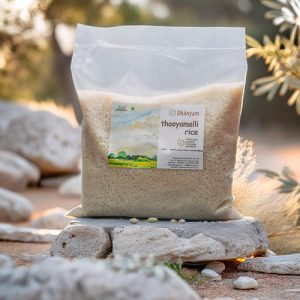
Thooyamalli—“pure jasmine”—is a pale traditional rice rather than a red or black one. Its appeal lies in aroma, clean flavour and a softer visual transition for families accustomed to white rice. Traditional agronomic references also list it among varieties with resistance to pests and diseases.
Use raw or parboiled Thooyamalli for everyday rice, sambar sadam, lemon rice, curd rice and festive meals. It demonstrates an important point: heritage value is not defined by dark pigment alone.
How to swap modern white rice without frustrating the family
A sudden switch from very soft white rice to a firm unpolished red grain can feel punitive, even when the intention is good. Make the change through flavour and familiarity.
Step 1: begin with one or two meals a week
Choose a mild grain such as Thooyamalli or Poongar, or mix 25% heritage rice with 75% familiar rice. Serve it with a favourite sambar, rasam, kootu or kuzhambu rather than introducing an unfamiliar grain and unfamiliar dish together.
Step 2: increase gradually
Move toward a half-and-half mix, then a full serving when the household understands the texture. Mixing works best when grains have similar cooking times; otherwise cook them separately and combine after cooking.
Step 3: explore formats beyond table rice
Aval, pori, puttu flour, dosa mix and broken rice make heritage varieties easier to include. A person who resists chewy red table rice may happily enjoy Mappillai Samba dosa, Kullakar aval or Karuppu Kavuni puttu.
Step 4: rotate rather than search for one “best” rice
Use Mappillai Samba for a robust lunch, Thooyamalli for a delicate meal, Karuppu Kavuni for a weekend preparation, and Kullakar or Poongar in batter and kanji. Rotation brings culinary pleasure and supports more than one seed community.
A practical cooking guide
Heritage rice is less standardised than industrially milled rice. Water absorption changes with variety, age, raw versus parboiled grain and degree of polishing. Treat these as starting points:
- Unpolished red raw rice: rinse briefly, soak 2–4 hours, then begin around 1 cup rice to 2½–3 cups water.
- Parboiled or very firm red rice: soak 3–6 hours and begin around 1:3 water.
- Karuppu Kavuni: soak 4–8 hours or overnight and begin around 1:3 water; use more for porridge.
- Pale minimally polished heritage rice: soak 30–90 minutes and begin around 1:2¼–2½ water.
In a pressure cooker, start with approximately four to six whistles at medium heat for firm red or black rice, then allow natural pressure release and a ten-minute rest. Pot cooking may take 35–60 minutes after soaking. Note the successful ratio on the packet for the next batch.
Do not repeatedly wash until the water is perfectly clear; excessive washing can remove fine nutrients. At the same time, rinse sufficiently to remove dust and inspect any traditionally sourced grain for stones or husk.
Raw, parboiled, hand-pounded and polished
The variety name is only part of the buying decision.
- Raw rice is dried and milled without parboiling. It often cooks more distinctly and suits many mixed-rice dishes.
- Parboiled rice is soaked and steamed in the husk before drying and milling. The process changes texture and can move some nutrients inward, producing a firm grain well suited to everyday South Indian meals.
- Hand-pounded or minimally milled rice retains more bran and character, though terminology varies between sellers.
- Polished rice has more outer layers removed. Even a heritage variety loses fibre and pigments as polishing increases.
Traditional grains in familiar South Indian dishes
- Soru with sambar, rasam and kuzhambu: Mappillai Samba, Kattuyanam, Kullakar and Poongar offer a hearty base.
- Idli, dosa and paniyaram: Kullakar, Karunkuruvai, Poongar and Mappillai Samba can replace part or all of the rice after longer soaking.
- Kanji: broken or whole heritage rice cooked with extra water is one of the gentlest ways to appreciate aroma and texture.
- Kavuni arisi sweet: cook soaked Karuppu Kavuni until tender, then add coconut and a restrained amount of jaggery.
- Curd rice: softer-cooked Thooyamalli or Poongar works well; mash lightly and cool before adding curd.
- Lemon, tamarind and coconut rice: use a grain that remains separate, and allow it to cool before seasoning.
- Aval and pori: heritage-rice flakes and puffed grains provide quick breakfasts and snacks without abandoning varietal diversity.
Why the comeback matters to farmers
When consumers ask for a named landrace, seed conservation becomes economically meaningful. A farmer can continue selecting and saving seed instead of treating it as a curiosity. Demand can support decentralised seed knowledge and create markets for varieties adapted to drought, flood, salinity or local pest pressure.
This does not mean every heritage crop yields more or needs less work. Many are tall, longer-duration or lower-yielding under conventional calculations. Their value may lie in resilience, straw, taste, reduced external inputs, crop diversity and the ability of farmers to retain seed. A fair price must recognise those services.
Choosing heritage rice well
- Look for the variety name, not only “red rice” or “traditional rice”.
- Check whether it is raw, parboiled, unpolished, semi-polished or polished.
- Prefer organic and traceable sources when practical.
- Expect natural variation in grain size and colour, but reject musty odour, insects or dampness.
- Buy a smaller quantity first and learn its cooking ratio.
- Store unpolished rice airtight, cool and dry; its natural oils make it less shelf-stable than highly polished rice.
- Be sceptical of dramatic claims that one rice cures diabetes, infertility, anaemia or another disease.
Explore Dhanyam heritage rice
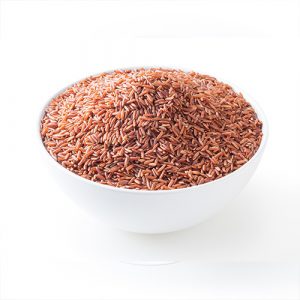
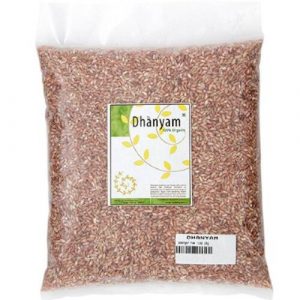
Dhanyam currently offers several heritage varieties in raw, parboiled and convenient traditional formats. Availability follows genuine harvests and may change by season.
The bottom line
The return of heritage rice is not a rejection of modern agriculture or a search for a magical grain. It is the recovery of choice. Minimally polished red and black rice can retain more fibre, pigments and other bran compounds than highly polished white rice, while pale heritage grains such as Thooyamalli contribute aroma and culinary diversity of their own.
Start slowly, soak generously, cook patiently and rotate varieties. Let Mappillai Samba, Karuppu Kavuni, Kattuyanam, Kuzhiadichan, Sivan Samba, Karunkuruvai, Kullakar, Poongar and Thooyamalli return to the table as foods—not supplements—and as living links between seed, farmer, landscape and South Indian cooking.
Further reading
- Tamil Nadu Agricultural University: organic rice practices and landraces
- Traditional Rice Varieties of Tamil Nadu: a sourcebook
- Review of the genetics and nutritional attributes of pigmented rice
- Research on South Indian traditional rice varieties
- Systematic review of pigmented rice and cardiometabolic markers
- Metabolomic study of traditional rice from the Cauvery delta