Raw Turmeric Powder: How It Differs from Cooking Turmeric
Raw turmeric powder and the turmeric powder kept beside the stove usually come from the same plant, Curcuma longa, but they are processed and used differently. Everyday cooking turmeric is commonly made from rhizomes that have been cured—usually boiled or steamed—then dried and ground. Raw turmeric powder generally means that the rhizome was dried and ground without this curing step.
What is raw turmeric powder?
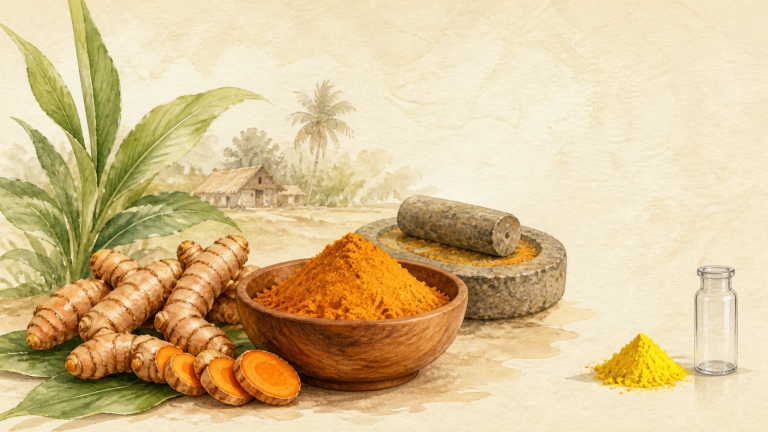
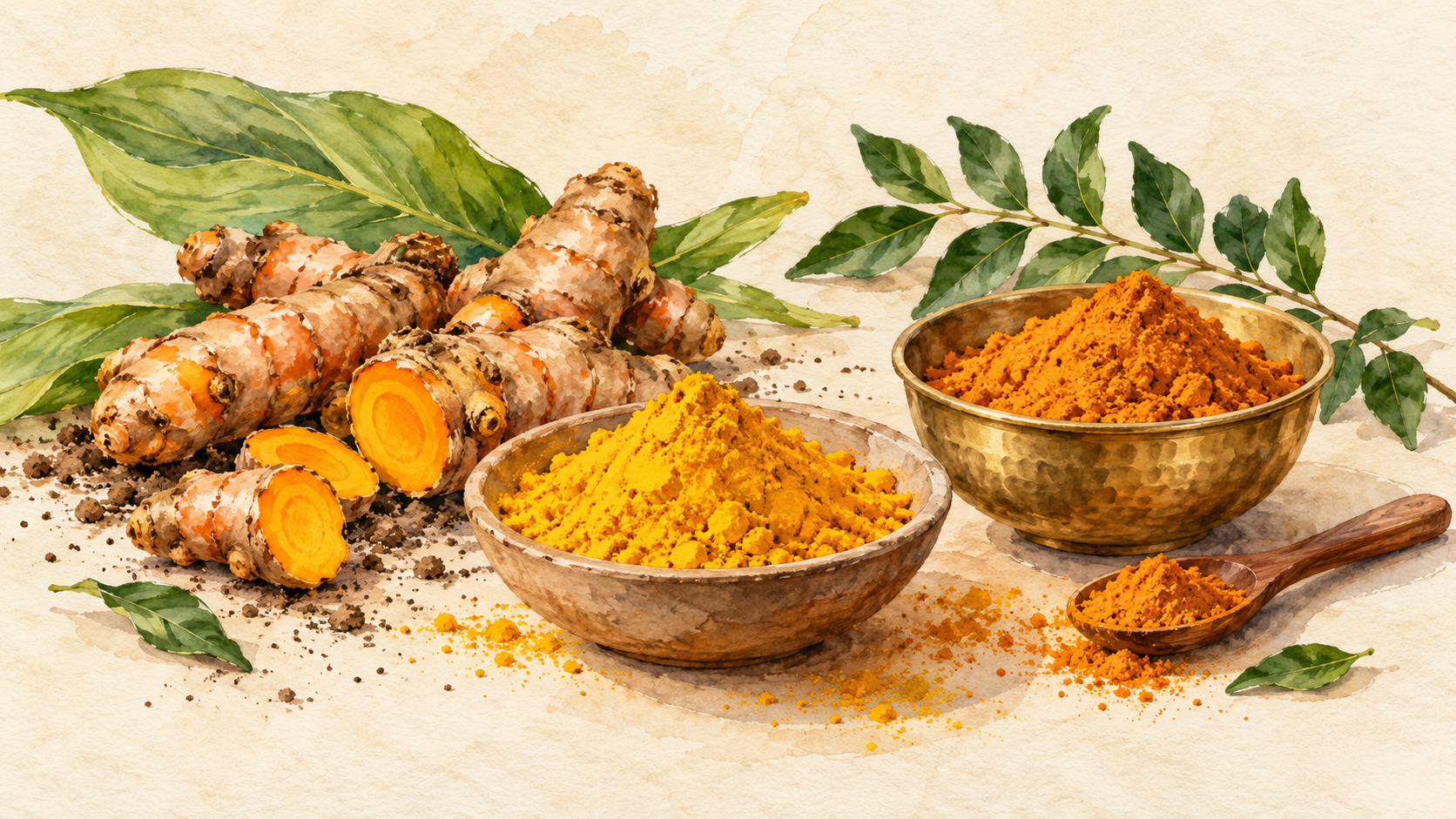
Turmeric is an underground stem, or rhizome, related to ginger. Fresh turmeric is washed, sliced or otherwise prepared, dried and ground to make a powder. When the rhizome is dried without the customary boiling or steaming stage, the result may be described as raw or uncured turmeric powder.
The word raw does not mean that the powder is fresh or moist. A shelf-stable powder still has to be dried carefully.
Raw turmeric powder vs regular cooking turmeric
| Point | Raw turmeric powder | Regular cooking turmeric |
|---|---|---|
| Typical processing | Rhizomes are generally dried without the usual boiling or steaming stage, then milled. | Rhizomes are commonly cured by boiling or steaming, dried, polished if required and ground. |
| Common role | Often sold for traditional body-care preparations; food use depends on the maker’s label. | Made as a culinary spice for daily cooking. |
| Aroma and taste | May taste sharper, greener, earthier or more bitter, depending on the variety and drying method. | Usually has the familiar rounded, warm turmeric flavour that blends easily into cooked dishes. |
| Handling | Needs careful hygienic drying and storage; it can stain skin, cloth and surfaces strongly. | Designed for convenient, consistent use in curries, poriyal, kootu, sambar and rice dishes. |
| How to choose | Confirm whether it is food-grade or meant only for external use, and read the processing description. | Choose a clean, aromatic powder from a traceable source and store it away from heat and moisture. |
Curing is a normal post-harvest practice, not a sign that cooking turmeric is artificial or inferior. Spices Board India describes turmeric curing as boiling the rhizomes followed by sun-drying. This helps develop the familiar colour and aroma, reduces drying time and produces a more uniform dried spice.
Is raw turmeric powder better?
Not in every situation. “Raw” describes a processing choice; it is not a quality grade. For sambar, rasam, vegetable curries and everyday seasoning, a culinary turmeric powder is the predictable choice. Its flavour has been shaped for cooking, and the product should meet food standards for turmeric powder.
Raw turmeric powder can be useful when you specifically want an uncured powder for a traditional external preparation. If the pack clearly identifies it as food-grade, it may also be used as directed by the producer.
Curcumin is one of turmeric’s natural pigments, but colour alone cannot reveal curcumin content. A brighter yellow powder is not necessarily stronger or purer. Only appropriate testing can measure curcuminoids and detect contaminants reliably.
How raw turmeric powder is traditionally used
Across Indian homes, turmeric has long had a place in bathing powders, pre-wedding haldi or nalangu preparations and simple body packs. These are cultural and cosmetic uses.
A simple body-pack approach
- Mix a small pinch of raw turmeric powder with plain curd, besan or water to form a soft paste.
- Patch-test it on a small area of intact skin and wait 24 hours.
- If there is no irritation, apply a thin layer briefly and rinse gently with water.
- Stop if it causes burning, itching, swelling or a rash.
Use a clean spoon and bowl, avoid the eyes and broken skin, and remember that turmeric can leave a temporary yellow stain.
Can you use it in cooking?
Use raw turmeric powder in food only when its pack or producer clearly says it is food-grade. If it is approved for culinary use, start with a small quantity because its taste may be more bitter or earthy than regular turmeric.
For daily cooking, ordinary turmeric powder remains the simpler choice. FSSAI defines turmeric powder as powder obtained by grinding dried Curcuma longa rhizomes or bulbous roots and sets limits for moisture and other quality measures. It must be free from added colouring matter, lead chromate and foreign starch.
How to choose and store turmeric powder
- Read the intended use. Check whether the powder is labelled for food, external use or both.
- Ask what raw means. Look for a clear statement about washing, slicing, drying and whether the rhizomes were cured.
- Prefer traceability over dramatic colour. Variety, source and handling tell you more than fluorescent brightness.
- Buy a practical quantity. A smaller pack is easier to finish while its aroma is fresh.
- Keep it dry. Store it in an airtight container away from sunlight, steam and stove heat, and always use a dry spoon.
- Discard damaged powder. Do not use turmeric that smells musty, shows mould, contains insects or has become damp.
Dhanyam’s raw and cooking turmeric powders
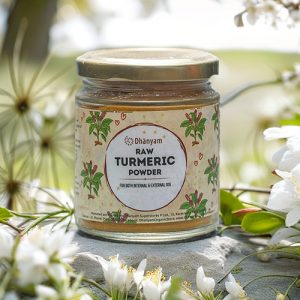
Dhanyam lists Organic Raw Turmeric Powder as a 75 g powder intended mainly for natural beauty and skincare preparations. For the spice box, Organic Turmeric Powder is the 100 g everyday culinary option. Both are currently listed as purchasable, but availability can vary by delivery location.
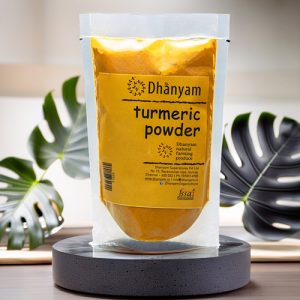
For a closer look at purity, fillers and why colour is not a reliable quality test, read Turmeric Adulteration: What May Be Hiding in Your Haldi?
The bottom line
Raw turmeric powder is generally uncured turmeric that has been dried and ground, while familiar cooking turmeric is commonly cured before drying and milling. That processing difference can affect aroma, flavour, consistency and intended use. It does not make one powder universally superior.
Choose the raw powder for an explicitly labelled traditional body-care use, following a patch test. Choose food-grade culinary turmeric for regular cooking. In either case, a clear label, careful processing, clean storage and a traceable source matter more than the word “raw” or the intensity of the yellow.