What is Organic Food ?
What Is Organic Food?
Walk into a supermarket today and you will find many expressions on food labels: organic, natural, farm fresh, chemical-free, traditional and residue-free. Although these words may appear similar, they do not necessarily mean the same thing.
So what exactly is organic food? Is it simply food grown without pesticides? Does “organic” automatically mean more nutritious? And how can a customer know whether a product is genuinely organic?
Let us understand organic food clearly and practically.
Organic food is the result of a farming system
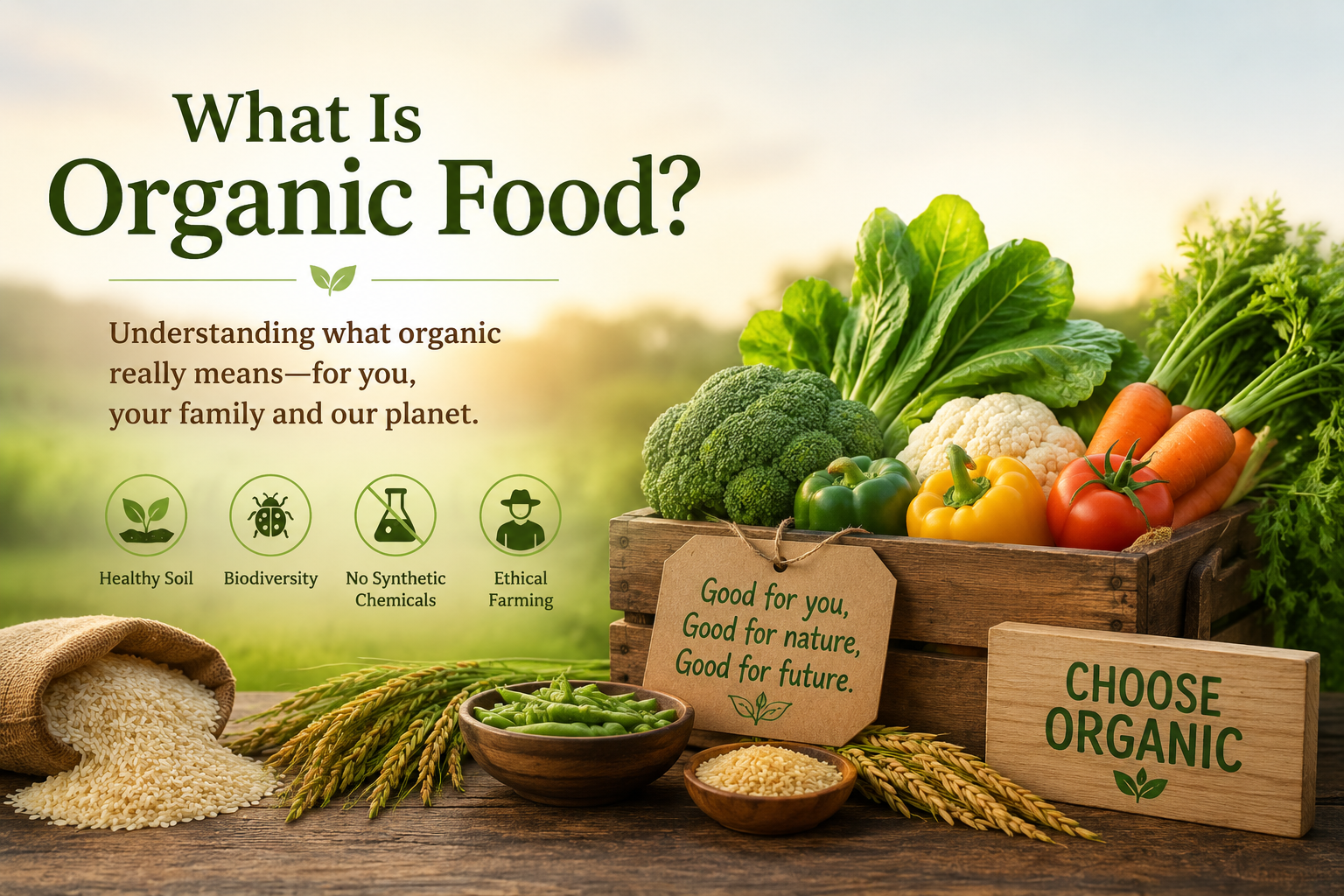
Organic food is not defined merely by the absence of one particular chemical. It is food produced through an agricultural system designed to protect soil health, biodiversity and the surrounding environment.
The Food Safety and Standards Authority of India describes organic food as food produced through holistic agricultural practices that focus on biodiversity, soil health and chemical-free inputs, while following recognised organic-production standards.
Organic farming therefore looks at the farm as a living ecosystem. The objective is not simply to replace one fertiliser or pesticide with another. It is to build fertile soil, encourage natural biological activity, reduce contamination and create conditions in which crops can grow sustainably.
How is organic food produced?
Organic farmers rely on a combination of traditional knowledge, biological processes and carefully permitted inputs.
Their practices may include:
- Applying compost, farmyard manure and other organic matter.
- Rotating crops to maintain soil fertility.
- Growing green-manure or cover crops.
- Using beneficial insects and biological pest controls.
- Maintaining diversity on and around the farm.
- Controlling weeds through mulching, cultivation or manual methods.
- Conserving soil and water.
- Keeping records of seeds, inputs, cultivation and harvest.
- Protecting the crop from contamination during storage and transport.
The National Programme for Organic Production, or NPOP, establishes standards for organic production, inspection, certification and the use of the India Organic mark. Its scope covers crops and processed crop products as well as areas such as livestock, poultry, aquaculture and beekeeping.
Organic, natural and chemical-free are not the same
These terms are often used interchangeably, but customers should know the difference.
Organic
“Organic” is a standards-based claim. A certified organic product must be produced and handled according to an approved organic-production system and supported by the required certification or recognised assurance mechanism.
Natural
“Natural” is a broad expression. Depending on the product, it may describe minimal processing, traditional ingredients or the absence of certain additives. By itself, it does not necessarily prove that the agricultural ingredients were organically grown. Infact, nowadays, we find many unscrupulous vendors using this phrase to pass off non-organic chemical produce as organic.
Chemical-free
Everything in food, including water, vitamins and proteins, is made of chemicals in the scientific sense. In ordinary usage, “chemical-free farming” generally means avoiding synthetic agricultural chemicals.
However, this expression by itself may not provide information about inspection, documentation, contamination controls or certification.
Pesticide-residue-free
A residue test examines the sample submitted to a laboratory for the substances included in that particular test.
A satisfactory test result is valuable, but it is not identical to organic certification. Organic assurance examines the production system, while residue testing examines a sample of the resulting product. The two can complement each other, but they answer different questions.
How does organic certification work in India?
India’s Food Safety and Standards (Organic Foods) Regulations recognise two principal systems:
- The National Programme for Organic Production, commonly called NPOP.
- The Participatory Guarantee System for India, commonly called PGS-India.
The regulations are based on the standards of these two systems.
NPOP certification
NPOP is administered through APEDA under the Ministry of Commerce and Industry. It includes production standards, accreditation of certification bodies, inspection and certification procedures, grower-group certification and rules governing the India Organic logo.
Under third-party certification, an accredited certification body reviews the farmer, producer, processor or other operator against the applicable standards.
Certification may involve:
- Inspection of the farm or production facility.
- Review of input and cultivation records.
- Verification of the source and quantity of materials.
- Traceability checks.
- Examination of storage and processing practices.
- Assessment of contamination risks.
- Sampling and testing where required.
- Annual certification and surveillance procedures.
PGS-India
PGS-India is a participatory assurance system particularly relevant to groups of farmers and local markets. Farmers participate in peer review, documentation and collective compliance under the PGS framework.
Both systems seek to provide assurance that products sold as organic have been produced according to recognised standards, although their structures and intended applications differ.
What should customers look for on an organic food label?
For packaged organic food sold in India, customers should look for the relevant organic certification or assurance mark and the Jaivik Bharat identity mark, together with the other required food-labelling information.
Depending on the certification system, the pack may carry:
- The Jaivik Bharat logo.
- The India Organic logo for NPOP-certified products.
- The PGS-India Organic logo for products certified under PGS-India.
- The FSSAI licence or registration details.
- The certification-body or operator information required for traceability.
FSSAI’s guidance states that the label may carry the India Organic or PGS-India Organic logo according to the system under which the product is certified.
A logo alone should not be treated as decorative artwork. It should correspond to a valid certification or recognised organic assurance system.
What does the conversion period mean?
A farm does not usually become certified organic the day a farmer stops using conventional inputs.
The land normally has to undergo a prescribed conversion period. During this time, the farmer follows organic practices, maintains the required records and undergoes inspection, but the produce may not yet qualify for sale as fully organic.
The conversion period helps establish that the farm has transitioned from conventional to organic management and is complying with the required production system.
This is one reason genuine organic farming requires patience. The farmer may bear higher effort and documentation costs before receiving the full market benefit of organic certification.
Does organic food contain absolutely no pesticide residue?
Organic standards are designed to avoid prohibited inputs, but no responsible seller should promise that every organic product contains absolutely zero detectable residue under every circumstance.
Contamination can arise through:
- Spray drift from neighbouring farms.
- Contaminated water.
- Soil history.
- Shared storage or transport.
- Environmental pollution.
- Accidental mixing during handling.
- Naturally occurring substances.
Organic certification is therefore based on production standards, inspections, records and traceability—not merely on the promise of a perfect laboratory result.
Testing remains an important verification tool, particularly when used thoughtfully alongside farm inspections, sourcing controls and certification.
Why can organic food cost more?
Organic food may cost more for several reasons:
- Organic cultivation can require more labour.
- Weed and pest management may be more demanding.
- Farmers must maintain detailed records.
- Inspection and certification involve costs.
- Conversion takes time.
- Organic produce must be kept separate from conventional produce.
- Storage, transport and processing require traceability controls.
- Production may occur on a smaller scale.
- Some crops may produce lower or less predictable yields, particularly during transition.
The price difference is not simply a charge for a label. In a well-managed organic supply chain, it reflects the additional work required from the farm through processing, packing and retail.
However, a high price by itself does not prove authenticity. Customers should consider certification, sourcing transparency, traceability and the reputation of the seller.
Can small farmers practise organic farming without certification?
Yes. Many farmers use traditional, ecological or natural cultivation practices without obtaining formal certification.
Their produce may be genuinely grown with great care. However, when such food is sold to an unfamiliar customer, the challenge is one of assurance.
The customer may reasonably ask:
- Who is the farmer?
- Where is the farm?
- What inputs were used?
- How is compliance verified?
- Are farm records maintained?
- Has anyone inspected the farm?
- How is the produce kept separate?
- Is residue testing undertaken where appropriate?
Direct trust can work well in a close farmer-consumer relationship. As the supply chain becomes longer, documented verification becomes increasingly important.
How can you make better organic purchases?
A customer need not become a certification expert. A few practical checks can help.
Read the complete label
Do not rely only on words printed prominently on the front. Examine the certification marks, ingredients, licence details, manufacturer or packer, dates and contact information.
Ask who produced it
A trustworthy seller should be able to explain the source of important products.
Look for traceability
Can the product be traced to a farmer, grower group, processor or certified operator?
Be cautious of vague claims
Expressions such as “farm fresh,” “pure,” “natural” and “traditional” can be meaningful descriptions, but they should not automatically be interpreted as certified organic.
Buy from sellers who verify their sources
Certification is valuable, but responsible retailing should go further through supplier verification, farm visits, documentation, careful handling and appropriate testing.
Begin with foods your family uses regularly
There is no need to change the entire kitchen in one day. Start with frequently consumed staples such as:
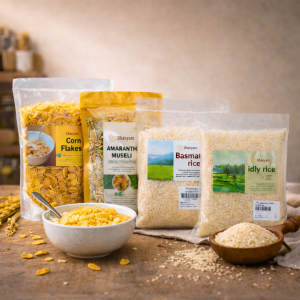
- Rice.
- Dal.
- Atta.
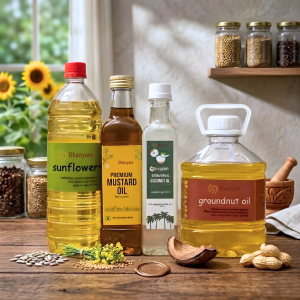
- Cooking oils.
- Spices.
- Millets.
- Jaggery.
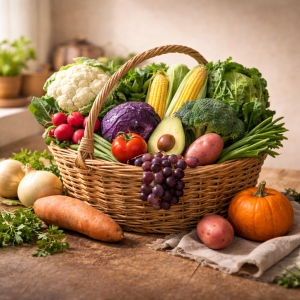
- Vegetables.
A gradual shift is easier to sustain.
Organic farming is about more than the final product
When we buy food, we usually see only the finished rice, dal, oil, spice or vegetable. Organic agriculture asks us to consider the system behind that food.
How was the soil treated?
What happened to insects, birds and microorganisms on the farm?
What inputs were used?
How was the farmer trained?
Was the harvest kept separate?
Can the product be traced?
Organic food is therefore not simply a premium version of ordinary food. At its best, it represents a relationship among the soil, the farmer, the food producer, the retailer and the family that finally consumes it.
Dhanyam’s approach
At Dhanyam, our objective is not merely to place the word “organic” on a shelf.
We work to understand the source of the food, the people producing it and the systems used to verify it. Depending on the product and supply chain, this may involve certification review, supplier documentation, farm visits, processing checks, traceability and residue testing.
We also recognise that trust must be earned continuously. Organic authenticity is not established through a single claim; it comes from careful sourcing and consistent verification from the farm to the store.
At Dhanyam, every food product we offer falls into one of two clearly identified sourcing categories. This allows our customers to understand exactly how the product has been verified.
1. Certified Organic
Many of our products are sourced from farms and producer groups that follow the formal organic certification process.
These products are grown, handled and certified under recognised organic standards. In addition, Dhanyam’s own packing and handling facility is certified under the National Programme for Organic Production (NPOP), ensuring that certified organic products continue to be handled in accordance with the applicable organic requirements throughout the packing process.
Products in this category are clearly identified as Certified Organic.
2. Dhanyam Natural Farming Produce
India has thousands of small and dedicated farmers who practise natural and organic methods but are unable to obtain formal certification because of the associated costs, documentation and administrative requirements.
We believe that the absence of certification should not prevent such sincere farmers from reaching customers.
For these farmers, Dhanyam follows its own structured sourcing and verification process.
Before beginning procurement, our team visits the farms, interacts with the farmers, studies their cultivation practices, reviews the inputs being used, understands their farming methods and carries out detailed assessments before approving them as suppliers. We continue to maintain a close relationship with these farmers and periodically review our sourcing.
Products sourced through this process are distinctly labelled as Dhanyam Natural Farming Produce.
Clear labelling for complete transparency
We believe customers should always know how a product has been verified.
Therefore, every food product sold at Dhanyam is clearly identified as one of the following:
- Certified Organic – sourced through recognised organic certification systems and handled in our NPOP-certified packing facility.
- Dhanyam Natural Farming Produce – sourced from carefully evaluated natural-farming farmers and farmer groups who do not hold formal organic certification but have been independently assessed through Dhanyam’s own sourcing and verification process.
By clearly distinguishing these two categories, we aim to give our customers complete transparency while also supporting small farmers who genuinely practise natural farming but may not yet have the resources to obtain formal certification.
Key takeaways
- Organic food is produced according to an agricultural system that emphasises soil health, biodiversity and ecological management.
- Organic does not simply mean that nothing was sprayed on the crop.
- “Organic,” “natural,” “chemical-free” and “residue-free” do not mean the same thing.
- India recognises NPOP and PGS-India systems under its organic-food regulatory framework.
- Packaged certified organic foods should carry the applicable certification or assurance marks and required labelling.
- Organic certification examines the production system; residue testing examines a particular food sample.
- Organic food should not automatically be assumed to contain more of every nutrient.
- Certification, traceability and the reliability of the seller are all important when choosing organic food.
Frequently Asked Questions
Is organic food completely pesticide-free?
Organic standards prohibit or restrict conventional synthetic pesticides and prioritise ecological methods. However, accidental environmental contamination can sometimes occur. Organic certification evaluates the production system rather than promising that every sample will always contain absolutely zero detectable residue.
Is natural food the same as organic food?
No. “Natural” is a broad description and does not by itself establish that the ingredients were produced according to recognised organic standards.
Is organic food healthier?
Organic food can form part of a healthy diet, but health depends on the complete diet. An organic product is not automatically low in sugar, fat or salt. Organic primarily describes the production system.
How can I verify an organic product in India?
Check the complete label for the Jaivik Bharat mark, the relevant India Organic or PGS-India mark, FSSAI details and traceability information. You can also ask the seller about the certifying system and source. In case of Dhanyam, you can look for the Dhanyam Natural Farming Produce logo.
Why is organic food expensive?
Organic production can involve more labour, certification, documentation, segregation, traceability and smaller production volumes. These costs can contribute to a higher retail price.
Can unpackaged food be organic?
It may be produced organically, but the customer should ask how the claim is verified. The applicable labelling and certification requirements may vary according to the producer, seller and regulatory exemptions.
Should I switch entirely to organic food immediately?
Not necessarily. A gradual transition beginning with frequently consumed staples is practical and easier to maintain.
This article is intended for general education. References to food and health should not be treated as individual medical or dietary advice.